Across democracies and authoritarian states alike, press freedom hinges on the political climate and legal frameworks that govern it. Recent legislative trends show governments increasingly using national security laws, defamation statutes, and digital regulations to control information flow. When political tensions rise, media outlets often become targets, facing everything from licensing hurdles to direct censorship.
The relationship between politics and press freedom remains fundamentally cyclical: as administrations change, so too can the legislative environment that either nurtures or constrains independent journalism. Despite constitutional protections in many countries, the practical reality of media freedom continues to be defined by those who hold political power and the laws they choose to enact or enforce.
Especially so in South Korea, where the past seven heads of state have all been embroiled in corruption scandals. In mid-March of 2018, a court in Seoul began hearing the case of three former spy chiefs who stand accused of funneling 4 billion Korean won ($3.8m) from the National Intelligence Service to the office of the former president Park Geun-hye, who was impeached a year ago.
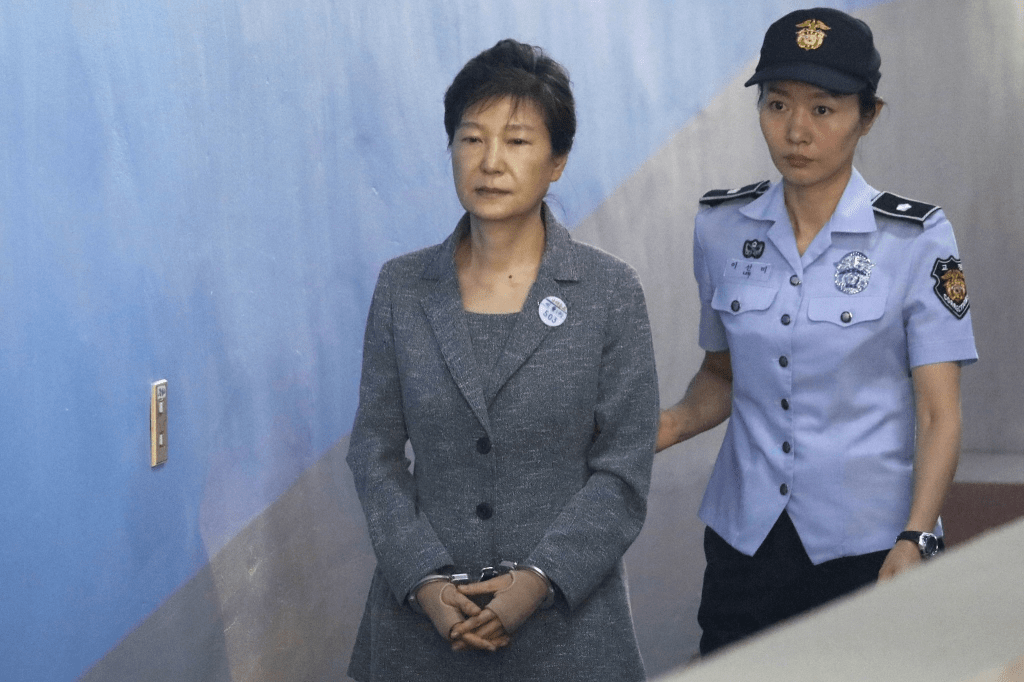
Just a week later, prosecutors arrested Lee Myung-bak, another former president, over allegations that he had collected more than 14 billion Korean won ($10m) in bribes while in office and had hidden his ownership of a profitable auto-parts maker. It’s no coincidence that press freedom becomes sparse in a political climate like this one.
A timeline of Korean legislature on press freedom:
How have our constitutional rights as journalists and informed citizens changed over time? Find out below.
1948 – National Security Act (NSA)
- Enacted to suppress pro-North Korean activities, the NSA criminalizes expressions deemed to “praise” or “incite” anti-state groups.
- Critics argue that the law has been used to limit freedom of expression and suppress dissenting voices.
1953 – Criminal Act: Articles 307–312 (Defamation and Insult)
- Establishes defamation and insult as criminal offenses, punishable by imprisonment or fines.
- Notably, even truthful statements can be subject to criminal liability if deemed not in the public interest.
2001 – Act on Promotion of Information and Communications Network Utilization and Information Protection (Network Act)
- Introduces provisions for cyber defamation, imposing stricter penalties for defamatory statements made online.
- Aims to address growing concerns over online harassment and misinformation.
2011 – Personal Information Protection Act (PIPA)
- Enacted to strengthen data privacy rights, PIPA is considered one of the world’s strictest privacy regimes.
- Applies to both public and private sectors, imposing significant obligations on data handlers.
2021 – Proposed Amendments to the Press Arbitration Act
- Aimed to introduce punitive damages for media outlets publishing false or manipulated reports.
- Faced strong opposition from journalists and civil society, who viewed it as a threat to press freedom.
- The proposal was eventually shelved due to public backlash.
2022 – Constitutional Court Review of the National Security Act
- The Constitutional Court initiated a review of the NSA’s constitutionality, responding to multiple petitions and ongoing criticism from legal scholars and press freedom advocates.
Major Political Events: How do they Correlate to South Korea’s Press Freedom Index?
South Korea’s press freedom rankings have swung dramatically with key political shifts over the past three decades. The nation’s democratic transition in 1987 triggered initial media liberalization, while the conservative Lee Myung-bak and Park Geun-hye administrations saw press freedom indices plummet amid government pressure on newsrooms and legal actions against critical journalists.
The 2016 impeachment crisis temporarily chilled coverage before Moon Jae-in’s administration brought modest improvements. Recent years have revealed how quickly legislative measures—particularly those targeting “fake news” and national security concerns—can erode hard-won media independence. Each change in political leadership continues to produce measurable ripple effects in South Korea’s press environment, with World Press Freedom Index rankings serving as a stark barometer of this political-media relationship.
2008 – YTN Journalist Firings
After the Lee Myung-bak administration took office, several journalists critical of the government were dismissed from YTN, sparking controversy over press suppression.
2013 – NIS Online Comment Scandal
The National Intelligence Service (NIS) was found to have manipulated public opinion by posting politically motivated comments online, raising concerns about press freedom and information integrity.
2014 – Sewol Ferry Disaster Media Control
The government was accused of controlling media coverage related to the Sewol Ferry disaster, leading to serious concerns about press independence and public transparency.
2016 — Park Geun-hye–Choi Soon-sil Scandal
Investigative reporting played a key role in exposing government corruption, but journalists also faced pressure and censorship amid the political fallout.
2018 — “Druking” Online Opinion Manipulation:
Supporters of the ruling party (PPP) were implicated in an online comment manipulation scheme, sparking debates about media manipulation and digital speech freedom.
2020 — COVID-19 Reporting Restrictions
The government faced criticism for allegedly controlling access to COVID-19 information, raising issues around transparency and the media’s ability to report freely.
2022 — Exclusion of MBC Journalists from Presidential Plane
President Yoon Suk-yeol barred MBC reporters from the presidential plane, triggering backlash over potential infringements on press access and independence.
2023 — End of Presidential Doorstepping
The presidential office suspended routine Q&A sessions with the press (known as doorstepping), sparking concerns about reduced media-government communication.
 MunhwaMetrics